
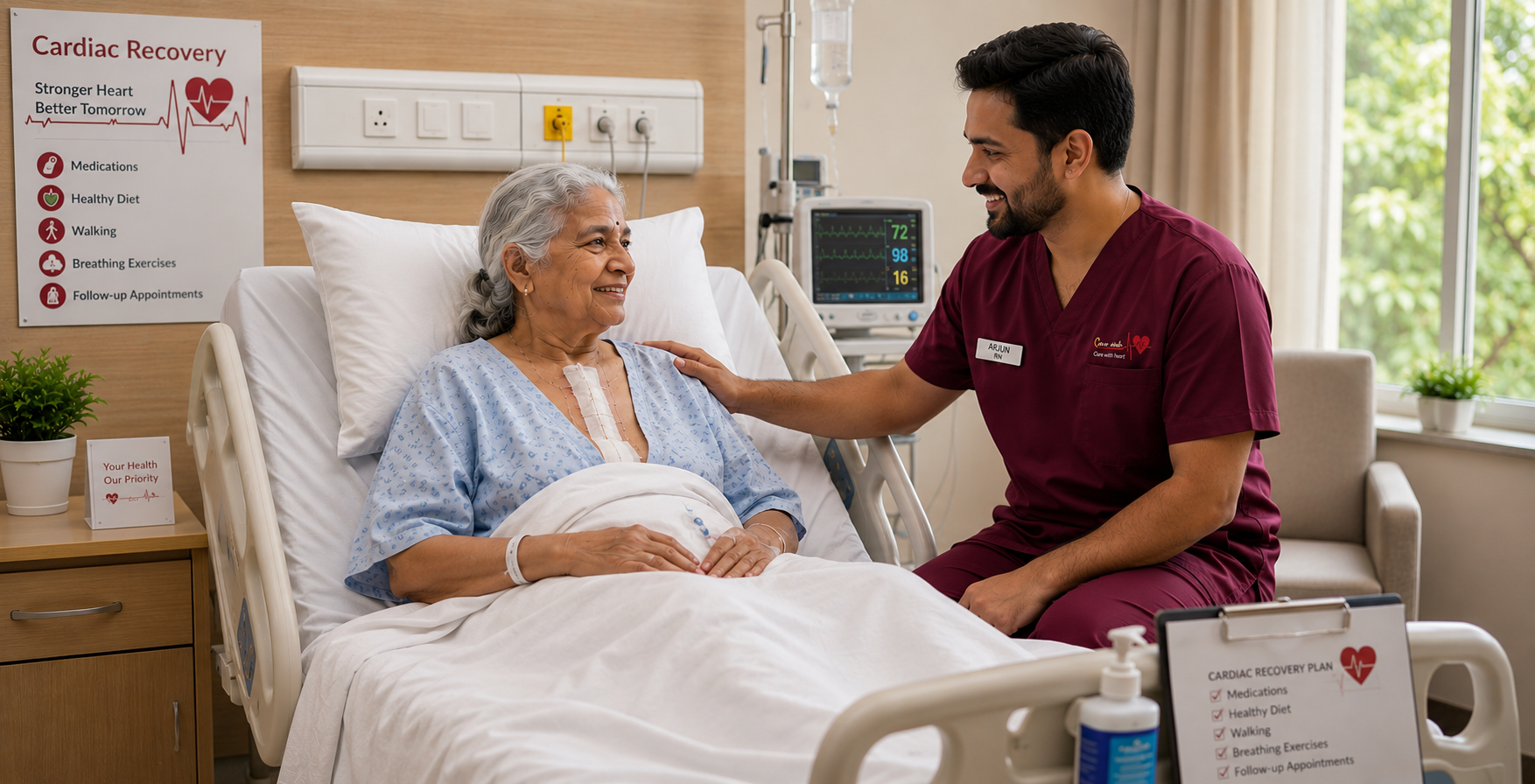
For many patients, bypass surgery feels like the biggest hurdle in the cardiac journey. Families focus on the surgery date, the hospital stay, and the discharge process. Once the patient returns home, there is often a sense of relief that the difficult phase is over.
But for most cardiac patients, the real challenge begins afterward.
Recovery after bypass surgery is not only about healing surgical wounds. It is about regaining physical strength, rebuilding stamina, restoring confidence, and returning to daily life safely. This is where cardiac rehabilitation becomes one of the most important parts of long-term recovery.
Unfortunately, many patients in India still underestimate the importance of structured rehabilitation. They assume recovery will happen naturally with rest and medication. In reality, patients who undergo a proper cardiac rehab program often experience significantly better recovery outcomes compared to those who recover without structured support.
Bypass Surgery May Save the Heart—But Recovery Restores Life
Bypass surgery improves blood flow to the heart, but the body still needs time to recover from the stress of surgery. The chest muscles weaken, stamina drops, breathing capacity may reduce temporarily, and even simple daily activities can feel exhausting.
This phase can become emotionally challenging as well. Patients often feel uncertain about movement, worried about overexertion, and frustrated by slow progress.
This is why rehab after bypass surgery is not just about exercise. It is about helping patients regain independence and confidence in a safe, structured way.
A good cardiac rehabilitation program ensures that recovery is not left to guesswork.
Why Recovery Outcomes Differ Between Patients
Two patients may undergo the same surgery but recover very differently.
Some return to normal life relatively quickly, while others struggle with fatigue, reduced mobility, or repeated complications. This variation is influenced not only by age or health condition but also by the quality of post-surgery care.
Studies published by the American Heart Association and other global cardiac bodies have consistently shown that patients participating in cardiac rehabilitation programs experience:
- Lower hospital readmission rates
- Better physical endurance
- Improved emotional well-being
- Better long-term survival outcomes
In India, awareness around cardiac rehab is still growing, but structured recovery is becoming increasingly important due to rising cardiac disease burden and changing family dynamics.
The First Few Weeks Shape Long-Term Recovery
The period immediately after discharge is one of the most critical phases in bypass surgery recovery.
During this time, patients remain physically weak and medically vulnerable. Fatigue, reduced appetite, sleep disturbances, and fear of movement are common.
Without structured support, recovery often becomes inconsistent. Some patients become overly inactive due to fear, while others push themselves too quickly in an attempt to regain normalcy.
This imbalance slows recovery and increases the risk of complications.
A structured cardiac rehabilitation approach introduces gradual, supervised recovery. It ensures that the patient progresses safely while building strength week by week.
Cardiac Rehabilitation Is About More Than Exercise
One of the biggest misconceptions about cardiac rehab is that it only involves physical exercise.
In reality, a complete cardiac rehabilitation program focuses on multiple aspects of recovery together.
Patients recovering from bypass surgery require:
- Structured physical rehabilitation
- Continuous monitoring of vitals
- Medication management
- Nutritional support
- Emotional and psychological care
- Guidance on lifestyle changes
When all these elements work together, recovery becomes safer and more effective.
Regaining Strength and Mobility After Surgery
One of the biggest improvements patients notice during rehab after bypass surgery is the gradual return of physical strength.
In the initial weeks, even walking short distances can feel difficult. However, with supervised rehabilitation, the body slowly adapts to activity again.
Walking routines, breathing exercises, and controlled mobility exercises help:
- Improve circulation
- Increase stamina gradually
- Strengthen muscles safely
- Restore confidence in movement
This structured progression helps patients regain independence much faster than unstructured home recovery.
The Emotional Side of Cardiac Recovery
Recovery after bypass surgery is not only physical.
Many patients experience anxiety, fear, irritability, or low confidence after surgery. Some worry constantly about another cardiac event, while others become hesitant to resume normal life.
This emotional burden often affects recovery speed.
A structured cardiac rehabilitation environment provides reassurance and routine. Patients recover alongside trained professionals who monitor their progress and guide them safely through recovery milestones.
This emotional support plays a major role in improving overall quality of life after surgery.
Why Home Recovery Alone Often Falls Short
In India, most patients recover at home after discharge. While this may feel comfortable, it often lacks the structure needed for effective rehabilitation.
Families usually do their best, but managing recovery can become overwhelming. Medication schedules, dietary restrictions, exercise routines, and monitoring all require consistency.
Without professional guidance, recovery may become irregular.
Patients recovering at home often:
- Skip exercises due to fear or fatigue
- Miss early signs of complications
- Struggle to maintain routines
- Experience slower overall recovery
This is why many doctors increasingly recommend structured cardiac rehab support after bypass surgery.
Why Care Homes Are Better Equipped for Cardiac Rehabilitation
This is where a structured Care home environment becomes highly important.
Unlike smaller clinics or standalone rehab centers, established Care Homes are designed to manage complete recovery journeys—not just therapy sessions.
Recovery after bypass surgery is continuous. It requires coordinated monitoring, rehabilitation, medication management, emergency readiness, and nutritional support.
Care Homes provide this integrated ecosystem under one roof.
Patients recovering in a Care Home benefit from:
- 24×7 clinical supervision
- Structured rehabilitation schedules
- Immediate emergency response support
- Cardiac-friendly meal planning
- Professional wound and pain management
This coordinated approach significantly improves consistency in bypass surgery recovery.
Why Established Care Home Providers Deliver Better Outcomes
Not all recovery environments offer the same level of expertise.
Established Care Home providers with wider presence generally have stronger infrastructure, multidisciplinary teams, and more experience in handling cardiac recovery cases.
Their experience allows them to:
- Manage complications more effectively
- Deliver standardised rehabilitation protocols
- Handle elderly patients with multiple conditions
- Provide better continuity of care
In contrast, smaller or fragmented recovery setups may lack the depth required for comprehensive cardiac care.
For families, choosing an experienced provider often results in more predictable and safer long-term outcomes.
Why Structured Cardiac Rehabilitation Matters More Than Ever in India
The goal of bypass surgery is not just survival—it is helping patients return to an active, confident, and independent life. This is where cardiac rehabilitation makes the biggest difference.
Patients who complete a structured cardiac rehab program often experience better stamina, improved mobility, greater confidence in daily activities, and reduced dependency on caregivers. In many cases, the difference between partial recovery and full recovery depends on how well rehabilitation is managed after surgery.
This has become increasingly important in India, where cardiovascular diseases account for more than 28% of all deaths, according to ICMR. At the same time, conditions like diabetes, hypertension, sedentary lifestyles, and delayed treatment are making recovery more complex.
As families focus more on long-term outcomes, the role of established Care Home providers is becoming increasingly critical. Recovery after bypass surgery requires continuous monitoring, structured rehabilitation, emergency readiness, and experienced clinical teams—something smaller or fragmented setups may struggle to provide consistently.
Established Care Homes with wider presence are often better equipped with:
- Stronger infrastructure and recovery systems
- Standardised rehabilitation protocols
- Trained multidisciplinary teams
- Better experience in managing complications and complex recovery cases
This integrated approach helps ensure safer recovery, faster improvement, and better long-term outcomes for cardiac patients.
Conclusion
Bypass surgery may restore blood flow to the heart, but cardiac rehabilitation is what helps patients rebuild life afterward.
Recovery is not simply about healing from surgery—it is about regaining strength, mobility, confidence, and independence.
A structured cardiac rehab program ensures that recovery is guided, monitored, and aligned with long-term health goals.
For families, understanding the importance of rehab after bypass surgery can make a significant difference in both recovery quality and quality of life.
Because in the end, successful recovery is not just measured by survival—it is measured by how well patients return to living fully again.
FAQs
1. What is cardiac rehabilitation after bypass surgery?
Cardiac rehabilitation is a medically supervised recovery program designed to help patients regain strength, mobility, and heart health after bypass surgery.
2. How long does bypass surgery recovery usually take?
Basic bypass surgery recovery may take 6–12 weeks, but full recovery and stamina improvement can continue for several months.
3. Why is rehab after bypass surgery important?
Rehab after bypass surgery improves physical recovery, reduces complications, and helps patients safely return to normal life.
4. Are Care Homes better than small rehab centres for cardiac recovery?
Established Care Homes often provide better long-term outcomes because they offer integrated recovery support, 24×7 supervision, emergency readiness, and structured rehabilitation programs.